The Stewardship Market:
A Trust-Verified Ecosystem Account System
Abstract.
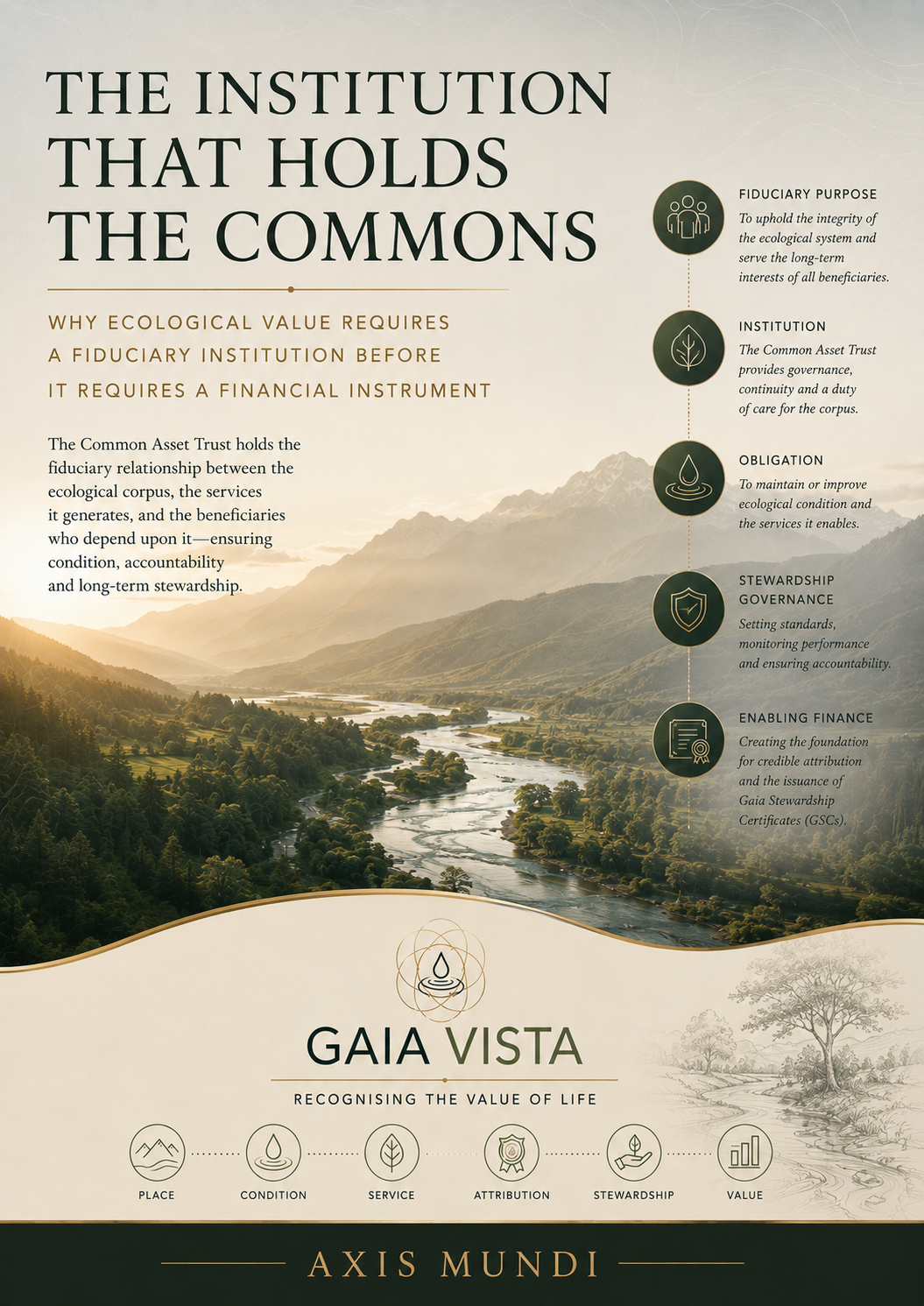
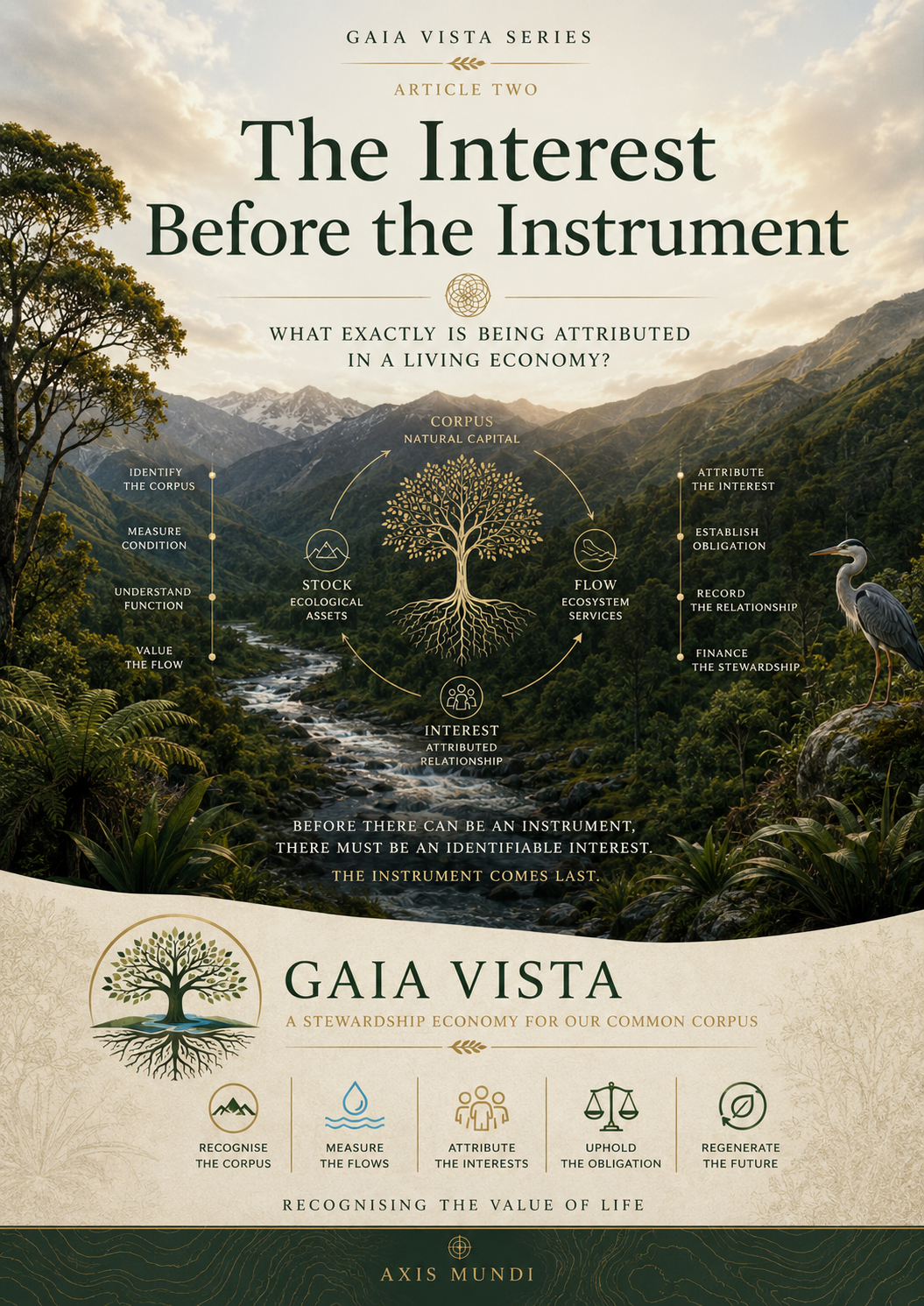
A commons-based system for pricing and transacting ecosystem services would allow stewardship payments to flow directly from beneficiaries to stewards without requiring a trusted central authority to determine the value of the commons or to adjudicate competing claims upon it. Independently verified ecosystem condition scores provide part of the solution, but the main benefits are lost if a trusted third party is still required to prevent double-counting — the issuance of instruments whose aggregate face value exceeds the independently verified value of the corpus they represent. We propose a solution to the double-counting problem using a nested hierarchy of Common Asset Trusts operating on a cryptographically chained corpus account ledger. The system timestamps ecosystem condition by hashing quarterly observation data into an ongoing chain of corpus accounts, forming a verified record of commons condition that cannot be altered without rerunning the full measurement protocol and invalidating all subsequent accounts. The instrument issuance capacity at any time is determined not by trustee discretion but by the current verified corpus value, subject to an 80% over issuance buffer. The system operates under a two-tier model: a trusted-operator phase during pilot establishment, transitioning to a distributed measurement network as the global architecture matures. As long as the primary measurement operator and its mandatory secondary verifier collectively produce honest corpus accounts, the system will generate the longest valid chain and outpace any attempt to issue against a manipulated valuation. The network is institutionally lean. Corpus accounts are published on a scheduled basis. Instruments can be issued, traded, and redeemed without a clearing institution, provided the corpus account ledger remains current and the over issuance constraint is enforced by the measurement system rather than by institutional goodwill.